
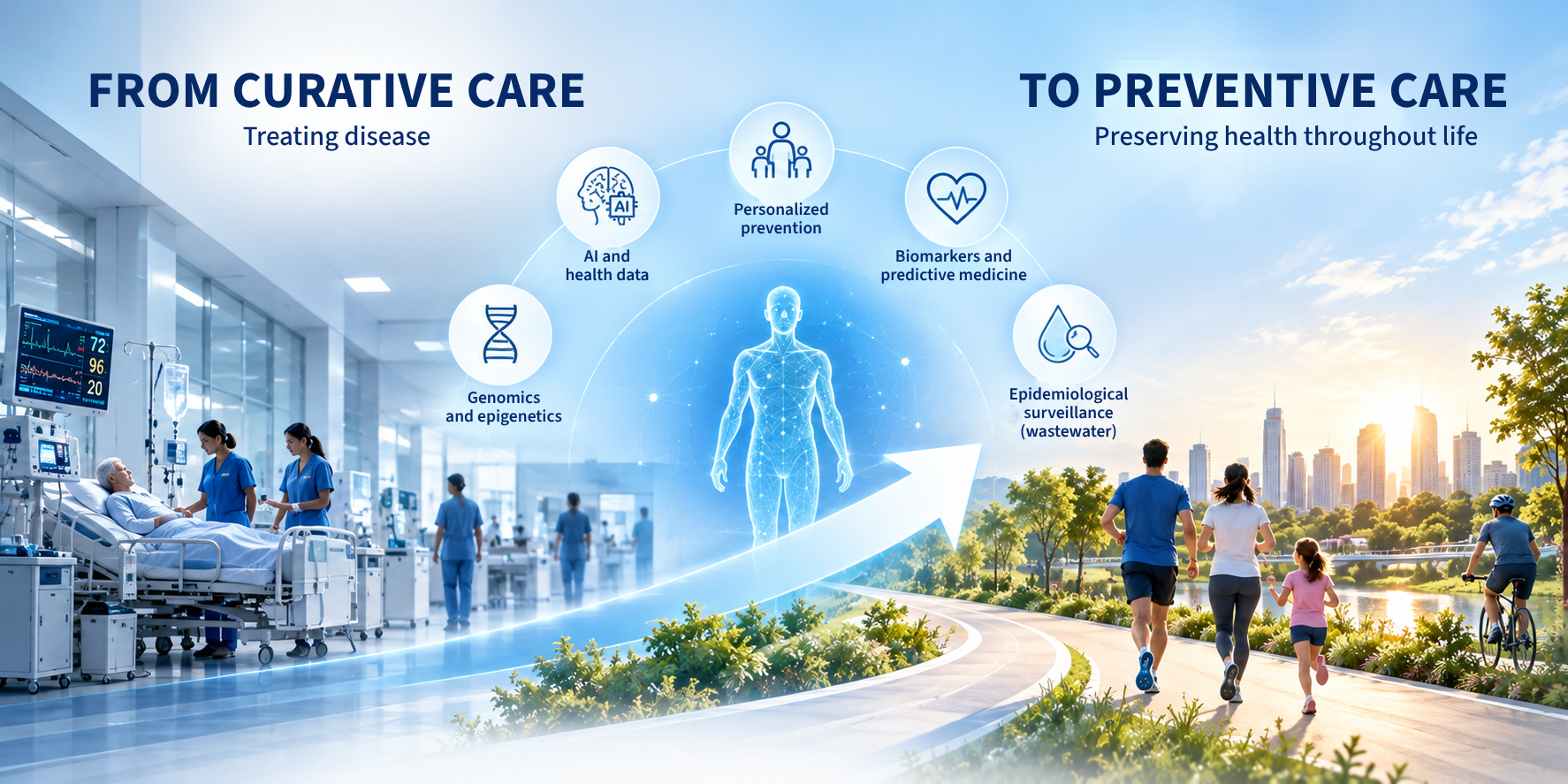
As the traditional treatment-focused healthcare model comes under increasing strain and chronic diseases continue to rise sharply, prevention and longevity are emerging as the cornerstones of a much-needed transformation of our healthcare system.
Prevention has been at the heart of discussions, whether through epidemiological surveillance using wastewater analysis, personalized approaches enabled by genomics and epigenetics, or the use of artificial intelligence to deliver more precise and effective medical monitoring. Advances in biomarkers and highly personalized medicine are paving the way for predictive and targeted care, capable of delaying or even preventing the onset of age-related diseases.
However, prevention is also an economic imperative: effective preventive strategies could generate substantial savings while improving people's quality of life.
The regulatory framework, which remains overly restrictive, must also evolve to facilitate access to predictive medicine, particularly genomics, while ensuring its safe and responsible use.
Furthermore, digital transformation, provided it is guided by ethical and inclusive principles, will enable preventive healthcare services to be made available to all, ensuring continuity of care and effective oversight of patient pathways. To achieve this, health data must be reliable, accessible, and interoperable.
Yet, regardless of scientific and technological progress, meaningful transformation will not happen without a fundamental change in healthcare financing. Given the constraints on available financial resources, funding will need to be progressively and directly reallocated from curative care towards prevention.
Prevention is equally relevant to primary care and hospital-based medicine.
In the hospital sector, France's 2019 Social Security Financing Act had already envisaged redirecting hospital funding for two chronic conditions, kidney failure and diabetes, towards preventive interventions. At the time, the relevant medical societies initially agreed, before subsequently reversing their position, that inpatient hospitalization was unnecessary for managing these conditions, except in very rare cases. They also acknowledged that preventing complications, such as the need for dialysis or the development of diabetic foot complications, would improve patients' well-being while reducing public expenditure.
The introduction of lump-sum payments for general practitioners (Forfaits Médecin Traitant) in 2026 represents a genuine step forward. However, because these payments supplement existing consultation fees rather than replace them, they do not constitute a sufficiently powerful lever to fundamentally transform care delivery.
In the hospital sector, it appears that only the Chronic Kidney Disease bundled payment scheme has been implemented, without challenging the existing inpatient bed capacity in the specialties concerned.
Transforming healthcare financing requires strong and unequivocal political commitment.
The objective is to establish a virtuous economic cycle: investing in prevention and health data to reduce avoidable hospitalizations and redundant medical procedures, then reinvesting the resulting savings into digital infrastructure and preventive healthcare.
The professional and administrative barriers are well known, and the technical solutions have already been conceptualized. The time for committees and further reports is over. What is now at stake is the sustainability of our public finances and the long-term viability of a healthcare system that serves patients.
What form should this transformation take? Should reimbursement rates for hospitalizations in the relevant specialties be reduced? Should hospital funding be converted into population-based allocations? Should quality-based financing be introduced, with incentives linked to reducing complications from chronic diseases?
Whatever approach is ultimately adopted, action is needed, and urgently.
This transformation would benefit patients, enabling them to live better and longer with chronic conditions. It would support medical progress and strengthen healthcare professionals' motivation. It would also create opportunities for industry to bring innovations into clinical practice, while contributing to more sustainable public finances.
Today, we must build a healthcare system that is more resilient, sustainable, and humane.
Prevention and longevity are no longer optional. They are essential to meeting the healthcare challenges of the 21st century.